Buy rsm.co.at ?
We are moving the project
rsm.co.at .
Are you interested in purchasing the domain
rsm.co.at ?
domain@kv-gmbh.de · 0541-91531010
Buy rsm.co.at ?
How does esterification work in chemistry?
Esterification is a chemical reaction that involves the reaction between an alcohol and a carboxylic acid to form an ester and water. This reaction is typically catalyzed by an acid or a base. The alcohol group (-OH) from the alcohol and the carboxyl group (-COOH) from the carboxylic acid combine to form an ester linkage (-COO-). Esterification is a reversible reaction, meaning that esters can be hydrolyzed back into their original alcohol and carboxylic acid components under certain conditions. **
Why is water eliminated during esterification?
Water is eliminated during esterification because it is a byproduct of the reaction between an alcohol and a carboxylic acid to form an ester. The elimination of water helps drive the reaction forward by Le Chatelier's principle, as the removal of the water shifts the equilibrium towards the formation of more ester product. Additionally, the presence of water can hydrolyze the ester back into the alcohol and carboxylic acid, so removing water helps prevent the reverse reaction from occurring. **


Similar search terms for Esterification
Top-Angebote
Products related to Esterification:
-
Roommates Lisa Audit Grey Dancing Leaves Peel and Stick WallpaperGive your space a classic farmhouse accent in as little as peel, stick & done! This grey and white botanical print is perfect for creating a cozy space with ease. Roll size - 20.5 inches wide x 18 feet. Design has a drop match with a 20.5 inch repeat.36,97 $*Shipping: 0,00 $Secure redirect to the provider
-
Roommates Lisa Audit Green Dancing Leaves Peel and Stick WallpaperLight and lively, this farmhouse botanical peel and stick wallpaper will upgrade your space with ease! Sage and white boughs of leaves create the perfect cozy look in as little as peel, stick & done. Roll size - 20.5 inches wide x 18 feet.43,28 $*Shipping: 0,00 $Secure redirect to the provider
-
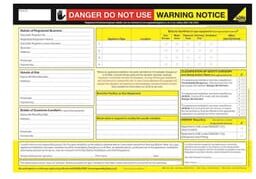
Officially Licensed Gas Safe Gas Safe® Warning Advisory Report Form - Pad of 50Our Gas Safe Premium Warning Advisory Record Pad features 50 sets of 3-part forms, now fully updated to comply with the latest Danger Do Not Use Warning Notice GSR-DDNUPAD1 regulations. These Licensed Gas Safe Premium Pads are thoughtfully designed in a landscape format, making it easier for engineers to complete records on-site. Each pad includes double covers with a writing guard, reinforced with triple stitching and binding tape for enhanced durability. The forms are individually numbered and perforated on the left-hand side, ensuring the spine remains intact when sections are removed. This pad is ideal for documenting unsafe gas appliance or installation faults, including Immediately Dangerous (ID), At Risk (AR), and Not to Current Standards (NCS) situations. Copies are provided for the gas user, the gas engineer/business, and, when necessary, the landlord.13,50 £*Shipping: 5,00 £Secure redirect to the provider
-
Flythe Consulting Brookville Wall Sconce Pair Antique Brass, Pair, Antique BrassThe Brookville Antique Brass Wall Sconce Pair uses simple design and a delicate aesthetic to create a truly elegant appeal. Each handcrafted, solid lacquered brass sconce has a scrolling arm, solid backplate, chain accents, and a 6 dia.x9 H etched...324,99 $*Shipping: 0,00 $Secure redirect to the provider



-
Is esterification also an oxidation reaction?
No, esterification is not an oxidation reaction. Esterification is a chemical reaction between an alcohol and a carboxylic acid to form an ester and water. In this reaction, the alcohol group (-OH) from the alcohol and the carboxyl group (-COOH) from the carboxylic acid combine to form an ester linkage. Oxidation reactions involve the loss of electrons, while esterification involves the formation of a new compound through the combination of functional groups. **
-
Is condensation the same as esterification?
No, condensation and esterification are not the same. Condensation is a general term used to describe the process of two molecules combining and releasing a small molecule, such as water, as a byproduct. Esterification, on the other hand, specifically refers to the chemical reaction between an alcohol and a carboxylic acid to form an ester and water. While esterification is a type of condensation reaction, not all condensation reactions are esterification. **
-
What is a catalyst in esterification?
A catalyst in esterification is a substance that increases the rate of the esterification reaction without being consumed in the process. It works by providing an alternative pathway for the reaction to occur, lowering the activation energy required for the reaction to take place. Common catalysts for esterification include acids, such as sulfuric acid or hydrochloric acid, which can protonate the carbonyl group of the carboxylic acid and activate it for nucleophilic attack by the alcohol. This results in the formation of the ester product at a faster rate than without the catalyst. **
-
What is the degree of esterification?
The degree of esterification refers to the extent to which a carboxylic acid has been esterified with an alcohol to form an ester. It is a measure of the proportion of carboxylic acid groups that have been converted to ester groups in a molecule. The degree of esterification can be expressed as a percentage, with 100% indicating complete esterification and 0% indicating no esterification. This parameter is important in various industrial processes, such as in the production of biodiesel and in the synthesis of polymers. **


Why is water split off during esterification?
Water is split off during esterification because it is a byproduct of the reaction between an alcohol and a carboxylic acid. In esterification, the hydroxyl group (-OH) from the alcohol and the hydrogen atom from the carboxylic acid combine to form water. This process helps to form the ester compound, which is the desired product of the reaction. **
What is the reaction type of esterification?
Esterification is a type of organic reaction that involves the formation of an ester from a carboxylic acid and an alcohol in the presence of an acid catalyst. This reaction is a condensation reaction, where a small molecule, such as water, is eliminated as a byproduct. Esterification is an important reaction in organic chemistry and is commonly used in the synthesis of fragrances, flavors, and pharmaceuticals. **
Top-Angebote
Products related to Esterification:
-
Flythe Consulting Arika Wall Sconce Pair, Pair, Satin NickelThe Arika Wall Sconce Pair is an adaptation of old-fashioned light fixtures, with an appealing design that will complement modern decor. The lacquered solid brass sconces have 4.75 dia.x7 H clear glass hurricanes that will protect your standard...179,00 $*Shipping: 22,95 $Secure redirect to the provider
-
Roommates Lisa Audit Grey Dancing Leaves Peel and Stick WallpaperGive your space a classic farmhouse accent in as little as peel, stick & done! This grey and white botanical print is perfect for creating a cozy space with ease. Roll size - 20.5 inches wide x 18 feet. Design has a drop match with a 20.5 inch repeat.36,97 $*Shipping: 0,00 $Secure redirect to the provider
-
Roommates Lisa Audit Green Dancing Leaves Peel and Stick WallpaperLight and lively, this farmhouse botanical peel and stick wallpaper will upgrade your space with ease! Sage and white boughs of leaves create the perfect cozy look in as little as peel, stick & done. Roll size - 20.5 inches wide x 18 feet.43,28 $*Shipping: 0,00 $Secure redirect to the provider
-
How does esterification work in chemistry?
Esterification is a chemical reaction that involves the reaction between an alcohol and a carboxylic acid to form an ester and water. This reaction is typically catalyzed by an acid or a base. The alcohol group (-OH) from the alcohol and the carboxyl group (-COOH) from the carboxylic acid combine to form an ester linkage (-COO-). Esterification is a reversible reaction, meaning that esters can be hydrolyzed back into their original alcohol and carboxylic acid components under certain conditions. **
-
Why is water eliminated during esterification?
Water is eliminated during esterification because it is a byproduct of the reaction between an alcohol and a carboxylic acid to form an ester. The elimination of water helps drive the reaction forward by Le Chatelier's principle, as the removal of the water shifts the equilibrium towards the formation of more ester product. Additionally, the presence of water can hydrolyze the ester back into the alcohol and carboxylic acid, so removing water helps prevent the reverse reaction from occurring. **
-
Is esterification also an oxidation reaction?
No, esterification is not an oxidation reaction. Esterification is a chemical reaction between an alcohol and a carboxylic acid to form an ester and water. In this reaction, the alcohol group (-OH) from the alcohol and the carboxyl group (-COOH) from the carboxylic acid combine to form an ester linkage. Oxidation reactions involve the loss of electrons, while esterification involves the formation of a new compound through the combination of functional groups. **
-
Is condensation the same as esterification?
No, condensation and esterification are not the same. Condensation is a general term used to describe the process of two molecules combining and releasing a small molecule, such as water, as a byproduct. Esterification, on the other hand, specifically refers to the chemical reaction between an alcohol and a carboxylic acid to form an ester and water. While esterification is a type of condensation reaction, not all condensation reactions are esterification. **
Similar search terms for Esterification
-
Officially Licensed Gas Safe Gas Safe® Warning Advisory Report Form - Pad of 50Our Gas Safe Premium Warning Advisory Record Pad features 50 sets of 3-part forms, now fully updated to comply with the latest Danger Do Not Use Warning Notice GSR-DDNUPAD1 regulations. These Licensed Gas Safe Premium Pads are thoughtfully designed in a landscape format, making it easier for engineers to complete records on-site. Each pad includes double covers with a writing guard, reinforced with triple stitching and binding tape for enhanced durability. The forms are individually numbered and perforated on the left-hand side, ensuring the spine remains intact when sections are removed. This pad is ideal for documenting unsafe gas appliance or installation faults, including Immediately Dangerous (ID), At Risk (AR), and Not to Current Standards (NCS) situations. Copies are provided for the gas user, the gas engineer/business, and, when necessary, the landlord.13,50 £*Shipping: 5,00 £Secure redirect to the provider
-
Flythe Consulting Brookville Wall Sconce Pair Antique Brass, Pair, Antique BrassThe Brookville Antique Brass Wall Sconce Pair uses simple design and a delicate aesthetic to create a truly elegant appeal. Each handcrafted, solid lacquered brass sconce has a scrolling arm, solid backplate, chain accents, and a 6 dia.x9 H etched...324,99 $*Shipping: 0,00 $Secure redirect to the provider
-
Roommates Lisa Audit Blue & White Dotted Line Peel and Stick WallpaperSimple yet statement making, Blue Dotted Line Peel And Stick Wallpaper is sure to catch the eye of everyone who enters your home. This graceful geometric pattern creates a designer look with minimal effort.48,49 $*Shipping: 0,00 $Secure redirect to the provider
-
What is a catalyst in esterification?
A catalyst in esterification is a substance that increases the rate of the esterification reaction without being consumed in the process. It works by providing an alternative pathway for the reaction to occur, lowering the activation energy required for the reaction to take place. Common catalysts for esterification include acids, such as sulfuric acid or hydrochloric acid, which can protonate the carbonyl group of the carboxylic acid and activate it for nucleophilic attack by the alcohol. This results in the formation of the ester product at a faster rate than without the catalyst. **
-
What is the degree of esterification?
The degree of esterification refers to the extent to which a carboxylic acid has been esterified with an alcohol to form an ester. It is a measure of the proportion of carboxylic acid groups that have been converted to ester groups in a molecule. The degree of esterification can be expressed as a percentage, with 100% indicating complete esterification and 0% indicating no esterification. This parameter is important in various industrial processes, such as in the production of biodiesel and in the synthesis of polymers. **
-
Why is water split off during esterification?
Water is split off during esterification because it is a byproduct of the reaction between an alcohol and a carboxylic acid. In esterification, the hydroxyl group (-OH) from the alcohol and the hydrogen atom from the carboxylic acid combine to form water. This process helps to form the ester compound, which is the desired product of the reaction. **
-
What is the reaction type of esterification?
Esterification is a type of organic reaction that involves the formation of an ester from a carboxylic acid and an alcohol in the presence of an acid catalyst. This reaction is a condensation reaction, where a small molecule, such as water, is eliminated as a byproduct. Esterification is an important reaction in organic chemistry and is commonly used in the synthesis of fragrances, flavors, and pharmaceuticals. **
* All prices are inclusive of VAT and, if applicable, plus shipping costs. The offer information is based on the details provided by the respective shop and is updated through automated processes. Real-time updates do not occur, so deviations can occur in individual cases. ** Note: Parts of this content were created by AI.