Buy rsm.co.at ?
We are moving the project
rsm.co.at .
Are you interested in purchasing the domain
rsm.co.at ?
domain@kv-gmbh.de · 0541-91531010
Buy rsm.co.at ?
How is ATP formed?
ATP is formed through the process of cellular respiration, which occurs in the mitochondria of cells. During cellular respiration, glucose is broken down in a series of steps, releasing energy that is used to convert ADP (adenosine diphosphate) into ATP (adenosine triphosphate). This process involves the electron transport chain and the production of ATP synthase, which adds a phosphate group to ADP to form ATP. Overall, ATP is formed through the transfer of energy from glucose to ADP, creating a molecule that serves as the primary energy source for cellular activities. **
What are ATP and ADP?
ATP (adenosine triphosphate) is a molecule that stores and transfers energy within cells. It is often referred to as the "energy currency" of the cell because it provides the energy needed for various cellular processes. When ATP is used for energy, it is converted to ADP (adenosine diphosphate) by releasing one phosphate group, along with the energy stored in the bond. ADP can then be converted back to ATP through cellular respiration to replenish the cell's energy supply. **


Similar search terms for ATP
Top-Angebote
Products related to ATP:
-
Roommates Lisa Audit Grey Dancing Leaves Peel and Stick WallpaperGive your space a classic farmhouse accent in as little as peel, stick & done! This grey and white botanical print is perfect for creating a cozy space with ease. Roll size - 20.5 inches wide x 18 feet. Design has a drop match with a 20.5 inch repeat.36,97 $*Shipping: 0,00 $Secure redirect to the provider
-
Roommates Lisa Audit Green Dancing Leaves Peel and Stick WallpaperLight and lively, this farmhouse botanical peel and stick wallpaper will upgrade your space with ease! Sage and white boughs of leaves create the perfect cozy look in as little as peel, stick & done. Roll size - 20.5 inches wide x 18 feet.43,28 $*Shipping: 0,00 $Secure redirect to the provider
-
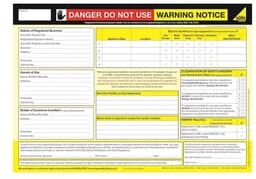
Officially Licensed Gas Safe Gas Safe® Warning Advisory Report Form - Pad of 50Our Gas Safe Premium Warning Advisory Record Pad features 50 sets of 3-part forms, now fully updated to comply with the latest Danger Do Not Use Warning Notice GSR-DDNUPAD1 regulations. These Licensed Gas Safe Premium Pads are thoughtfully designed in a landscape format, making it easier for engineers to complete records on-site. Each pad includes double covers with a writing guard, reinforced with triple stitching and binding tape for enhanced durability. The forms are individually numbered and perforated on the left-hand side, ensuring the spine remains intact when sections are removed. This pad is ideal for documenting unsafe gas appliance or installation faults, including Immediately Dangerous (ID), At Risk (AR), and Not to Current Standards (NCS) situations. Copies are provided for the gas user, the gas engineer/business, and, when necessary, the landlord.13,50 £*Shipping: 5,00 £Secure redirect to the provider



-
Where does ATP come from?
ATP, or adenosine triphosphate, is produced in the mitochondria of cells through a process called cellular respiration. During cellular respiration, glucose is broken down in the presence of oxygen to produce ATP, which serves as the primary energy source for cellular activities. Additionally, ATP can also be generated through the process of photosynthesis in plant cells, where sunlight is used to convert carbon dioxide and water into glucose and oxygen, ultimately leading to the production of ATP. **
-
What is ATP explained simply?
ATP, or adenosine triphosphate, is often referred to as the "energy currency" of the cell. It is a molecule that stores and transfers energy within cells for various cellular processes. When ATP is broken down into ADP (adenosine diphosphate) and inorganic phosphate, energy is released and can be used by the cell to fuel activities such as muscle contractions, nerve impulses, and protein synthesis. In essence, ATP provides the necessary energy for cells to carry out their functions and maintain life. **
-
What are glucose and ATP?
Glucose is a simple sugar that serves as the primary source of energy for our cells. It is obtained from the food we eat and is broken down through a series of metabolic processes to produce ATP (adenosine triphosphate). ATP is often referred to as the "energy currency" of the cell because it stores and transfers energy within cells for various cellular functions. Both glucose and ATP play crucial roles in providing energy for the body to carry out its daily functions. **
-
What is ATP in biology?
ATP, or adenosine triphosphate, is a molecule that serves as the primary energy currency in living organisms. It is composed of an adenosine molecule and three phosphate groups, and its high-energy phosphate bonds store and release energy for cellular processes. ATP is produced during cellular respiration and photosynthesis, and it is used to power various biological processes such as muscle contraction, active transport, and chemical synthesis. In essence, ATP is essential for the functioning and survival of all living organisms. **


What is the function of ATP?
ATP (adenosine triphosphate) is often referred to as the "energy currency" of the cell. Its primary function is to store and transfer energy within cells for various cellular processes. ATP is used to power chemical reactions, transport molecules across cell membranes, and drive muscle contractions. Essentially, ATP provides the energy needed for all cellular activities to occur. **
What is the meaning of ATP?
ATP stands for adenosine triphosphate, which is a molecule that serves as the primary energy carrier in cells. It is often referred to as the "energy currency" of the cell because it provides the energy necessary for various cellular processes, such as muscle contraction, nerve impulse transmission, and chemical synthesis. ATP is produced through cellular respiration and is used by cells to fuel their metabolic activities. **
Top-Angebote
Products related to ATP:
-
Flythe Consulting Arika Wall Sconce Pair, Pair, Satin NickelThe Arika Wall Sconce Pair is an adaptation of old-fashioned light fixtures, with an appealing design that will complement modern decor. The lacquered solid brass sconces have 4.75 dia.x7 H clear glass hurricanes that will protect your standard...179,00 $*Shipping: 22,95 $Secure redirect to the provider
-
Roommates Lisa Audit Grey Dancing Leaves Peel and Stick WallpaperGive your space a classic farmhouse accent in as little as peel, stick & done! This grey and white botanical print is perfect for creating a cozy space with ease. Roll size - 20.5 inches wide x 18 feet. Design has a drop match with a 20.5 inch repeat.36,97 $*Shipping: 0,00 $Secure redirect to the provider
-
Roommates Lisa Audit Green Dancing Leaves Peel and Stick WallpaperLight and lively, this farmhouse botanical peel and stick wallpaper will upgrade your space with ease! Sage and white boughs of leaves create the perfect cozy look in as little as peel, stick & done. Roll size - 20.5 inches wide x 18 feet.43,28 $*Shipping: 0,00 $Secure redirect to the provider
-
How is ATP formed?
ATP is formed through the process of cellular respiration, which occurs in the mitochondria of cells. During cellular respiration, glucose is broken down in a series of steps, releasing energy that is used to convert ADP (adenosine diphosphate) into ATP (adenosine triphosphate). This process involves the electron transport chain and the production of ATP synthase, which adds a phosphate group to ADP to form ATP. Overall, ATP is formed through the transfer of energy from glucose to ADP, creating a molecule that serves as the primary energy source for cellular activities. **
-
What are ATP and ADP?
ATP (adenosine triphosphate) is a molecule that stores and transfers energy within cells. It is often referred to as the "energy currency" of the cell because it provides the energy needed for various cellular processes. When ATP is used for energy, it is converted to ADP (adenosine diphosphate) by releasing one phosphate group, along with the energy stored in the bond. ADP can then be converted back to ATP through cellular respiration to replenish the cell's energy supply. **
-
Where does ATP come from?
ATP, or adenosine triphosphate, is produced in the mitochondria of cells through a process called cellular respiration. During cellular respiration, glucose is broken down in the presence of oxygen to produce ATP, which serves as the primary energy source for cellular activities. Additionally, ATP can also be generated through the process of photosynthesis in plant cells, where sunlight is used to convert carbon dioxide and water into glucose and oxygen, ultimately leading to the production of ATP. **
-
What is ATP explained simply?
ATP, or adenosine triphosphate, is often referred to as the "energy currency" of the cell. It is a molecule that stores and transfers energy within cells for various cellular processes. When ATP is broken down into ADP (adenosine diphosphate) and inorganic phosphate, energy is released and can be used by the cell to fuel activities such as muscle contractions, nerve impulses, and protein synthesis. In essence, ATP provides the necessary energy for cells to carry out their functions and maintain life. **
Similar search terms for ATP
-
Officially Licensed Gas Safe Gas Safe® Warning Advisory Report Form - Pad of 50Our Gas Safe Premium Warning Advisory Record Pad features 50 sets of 3-part forms, now fully updated to comply with the latest Danger Do Not Use Warning Notice GSR-DDNUPAD1 regulations. These Licensed Gas Safe Premium Pads are thoughtfully designed in a landscape format, making it easier for engineers to complete records on-site. Each pad includes double covers with a writing guard, reinforced with triple stitching and binding tape for enhanced durability. The forms are individually numbered and perforated on the left-hand side, ensuring the spine remains intact when sections are removed. This pad is ideal for documenting unsafe gas appliance or installation faults, including Immediately Dangerous (ID), At Risk (AR), and Not to Current Standards (NCS) situations. Copies are provided for the gas user, the gas engineer/business, and, when necessary, the landlord.13,50 £*Shipping: 5,00 £Secure redirect to the provider
-
Roommates Lisa Audit Blue & White Dotted Line Peel and Stick WallpaperSimple yet statement making, Blue Dotted Line Peel And Stick Wallpaper is sure to catch the eye of everyone who enters your home. This graceful geometric pattern creates a designer look with minimal effort.48,49 $*Shipping: 0,00 $Secure redirect to the provider
-
Roommates Lisa Audit Navy & White Dotted Line Peel and Stick WallpaperSimple yet statement making, Navy Dotted Line Peel And Stick Wallpaper is sure to catch the eye of everyone who enters your home. This graceful geometric pattern creates a designer look with minimal effort.32,53 $*Shipping: 0,00 $Secure redirect to the provider
-
What are glucose and ATP?
Glucose is a simple sugar that serves as the primary source of energy for our cells. It is obtained from the food we eat and is broken down through a series of metabolic processes to produce ATP (adenosine triphosphate). ATP is often referred to as the "energy currency" of the cell because it stores and transfers energy within cells for various cellular functions. Both glucose and ATP play crucial roles in providing energy for the body to carry out its daily functions. **
-
What is ATP in biology?
ATP, or adenosine triphosphate, is a molecule that serves as the primary energy currency in living organisms. It is composed of an adenosine molecule and three phosphate groups, and its high-energy phosphate bonds store and release energy for cellular processes. ATP is produced during cellular respiration and photosynthesis, and it is used to power various biological processes such as muscle contraction, active transport, and chemical synthesis. In essence, ATP is essential for the functioning and survival of all living organisms. **
-
What is the function of ATP?
ATP (adenosine triphosphate) is often referred to as the "energy currency" of the cell. Its primary function is to store and transfer energy within cells for various cellular processes. ATP is used to power chemical reactions, transport molecules across cell membranes, and drive muscle contractions. Essentially, ATP provides the energy needed for all cellular activities to occur. **
-
What is the meaning of ATP?
ATP stands for adenosine triphosphate, which is a molecule that serves as the primary energy carrier in cells. It is often referred to as the "energy currency" of the cell because it provides the energy necessary for various cellular processes, such as muscle contraction, nerve impulse transmission, and chemical synthesis. ATP is produced through cellular respiration and is used by cells to fuel their metabolic activities. **
* All prices are inclusive of VAT and, if applicable, plus shipping costs. The offer information is based on the details provided by the respective shop and is updated through automated processes. Real-time updates do not occur, so deviations can occur in individual cases. ** Note: Parts of this content were created by AI.